
 ESPAÑOL

First Offense DWI in North Carolina: Will You Go To Jail?
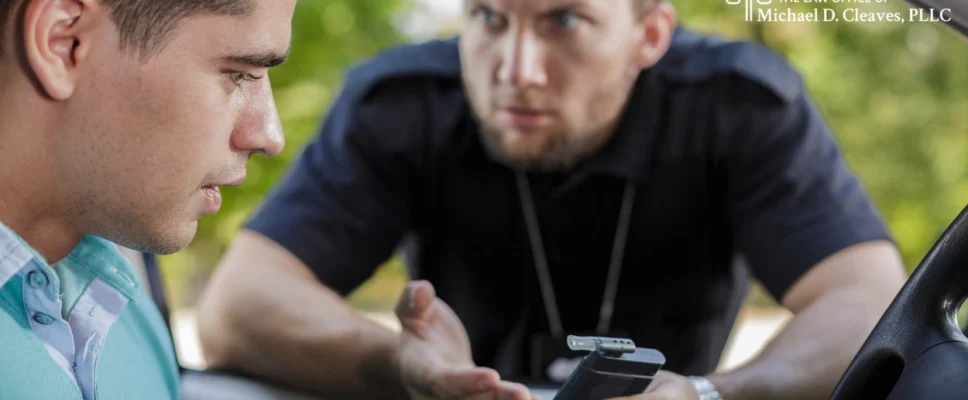
First Offense DWI in North Carolina: Will You Go To Jail?
If you were arrested for a first offense DWI in North Carolina, the question on your mind probably isn’t the fine – it’s whether you’re going to jail after your court date.
Most first-time offenders never serve real jail time, but North Carolina law still gives a judge that option, and small details from your arrest can decide it either way. The Law Office of Michael D. Cleaves, practicing in North Carolina since 2004, has walked clients through this exact fear more times than we can count.
Key Takeaways
- North Carolina sorts DWI convictions into six sentencing levels, and 58% of convictions statewide landed at Level 5, the lowest tier, in the most recent reporting year.
- A Level 5 first offense carries 24 hours to 60 days in jail, but judges routinely swap that minimum for community service instead.
- Jail becomes mandatory only when a grossly aggravating factor is present, like a prior DWI or a child in the car.
- Your license faces an automatic 30-day civil revocation right after arrest, separate from anything the court later orders.
- Free consultations are available for anyone facing a first offense DWI charge. If you’re staring down a court date this week, waiting to talk with a lawyer costs you options. Reach out now, while the arrest details and any witnesses are still fresh.
Will You Go to Jail for a First Offense DWI in North Carolina?
Of 24,694 DWI convictions imposed in fiscal year 2024, most were sentenced in Level 5, the lowest of the six punishment tiers North Carolina uses. Level 5 carries a fine of up to $200 and a jail term of 24 hours to 60 days, and a suspended sentence requires at least 24 hours in jail or 24 hours of community service.
An experienced first offense DWI in North Carolina attorney can shift that math well before your court date arrives, by presenting the mitigating side of your case at sentencing. Jail becomes far more likely the moment a grossly aggravating factor enters your file – that detail is worth understanding before you ever stand in front of a judge.
How North Carolina’s Six DWI Sentencing Levels Work
North Carolina doesn’t sentence DWIs as simply first, second, or third offense the way some states do. After a conviction, the judge must hold a sentencing hearing to determine whether aggravating or mitigating factors affect the sentence, sorting every case into one of six levels.
A first offense with no prior record and no grossly aggravating factors usually lands at Level Three, Four, or Five. Level Four carries a fine of up to $500 and a jail term of 48 hours to 120 days, and a suspended sentence requires at least 48 hours in jail or 48 hours of community service.
Where your case lands depends on a hearing your attorney can shape long before the judge sees you.
What Aggravating and Mitigating Factors Change Your Sentence
Three types of evidence decide your sentencing level, and the law treats them very differently. Grossly aggravating factors guarantee active jail time at Level One or Two, and they include:
- A prior DWI conviction within the last seven years
- A child under 18 in the vehicle at the time of the stop
- Driving on a license already revoked for impaired driving
- Causing serious injury to another person while impaired
Regular aggravating factors, like a BAC of 0.15 or higher or reckless driving, push your level up without guaranteeing jail. Mitigating factors, like a clean driving record or voluntary substance abuse treatment before sentencing, pull in the other direction.
Every one of these factors gets weighed at a hearing you attend once, and the clock on your case starts the day of your arrest. Talk to a criminal defense attorney before that hearing, not after.
What Happens to Your Driver’s License After a DWI Arrest
License consequences start before you ever see a judge. Thirty-day civil revocation occurs when an officer charges a person with DWI and that person’s BAC is 0.08 (or 0.04 for a commercial license) or higher, and the DMV automatically revokes the license for thirty days.
You cannot drive during the first ten days of the revocation, but you can obtain a limited driving privilege for the next twenty days. A conviction later adds a full year of revocation on top of that, though many first offenders qualify for a limited privilege again once they finish a substance abuse assessment.
Can You Reduce Jail Time With Community Service or an Interlock?
For Level Three, Four, and Five offenses, the answer is usually yes. Courts often suspend jail sentences if the driver completes community service, submits to a DWI assessment, completes required treatment, and pays all fines, fees, and court costs.
One detail most articles skip: North Carolina law requires ignition interlock vendors to reduce costs for drivers who cannot afford the device, waiving installation and removal charges and cutting the monthly service rate by half for those with income at or below 150 percent of the federal poverty line or enrolled in certain public assistance programs.
That option can be the difference between staying in compliance and losing a restored license over an unpaid device bill – a fact that also matters for clients more comfortable discussing these options in Spanish than working through interlock paperwork alone.
None of these numbers mean much until they’re applied to your specific record and arrest. A first offense DWI in North Carolina attorney can walk through that risk with you before you ever walk into court.
Frequently Asked Questions
How long does a DWI stay on your record in North Carolina?
A DWI conviction stays on your North Carolina record permanently, since the state does not automatically remove it after any set number of years. Expungement is only available in narrow situations, so treat a first conviction as a lasting mark and fight the charge accordingly.
Ask your attorney whether any pretrial resolution could avoid a conviction altogether.
Can I get limited driving privileges right after my arrest?
Yes, in most cases you can petition for a limited driving privilege once the first ten days of your revocation have passed, giving you twenty more days of restricted driving before the thirty-day period ends.
You’ll need proof of insurance and, often, a completed substance abuse assessment first. An attorney can usually file this paperwork faster than you can on your own.
What BAC counts as impaired driving in North Carolina?
You commit impaired driving in North Carolina if you drive after consuming enough alcohol to reach an alcohol concentration of 0.08 or more. Commercial drivers face a lower 0.04 threshold. Even a BAC just over the line can still result in a full DWI charge and conviction.
Will I need an ignition interlock device for a first offense?
Not always. An interlock is typically required when your BAC measured 0.15 or higher or under certain repeat-offense conditions, and it must stay installed for a set period tied to your license revocation.
If cost is a concern, ask whether you qualify for the statutory financial-hardship waiver, which lowers the installation and monitoring fees for drivers who meet the income eligibility requirements.
The Law Office of Michael D. Cleaves: Your DWI Defense Law Firm
Before advising any client on a plea, our office reviews the breath test calibration records and any available video, because a stop that looks solid on paper often doesn’t hold up under real scrutiny. That review is often what separates a Level 5 outcome from something far worse.
You don’t have to work through sentencing levels and license revocations on your own. Contact our firm today.
North Carolina DWI Resources:
Get In Touch With Us
Fields Marked With An “*” Are Required

Contact Us
Call Us Today704-871-0425
Location
129 North Green Street
Statesville, NC 28677
Fax704-871-0427
Quick Links

© 2026 The Law Office of Michael D. Cleaves, PLLC • All rights reserved.
*Images are obtained under license from Canva and other third-party stock image providers, with attribution included where required.
Digital Marketing By 